The striped hyena is a shy, nocturnal scavenger with dark vertical stripes on its sandy-gray coat and its distinctive mane. Smaller than its spotted relative, it stands about 70 to 80 centimeters tall at the shoulder. The striped hyena's weight ranges between 25 and 50 kilograms, but can make itself appear larger by raising its mane when threatened.
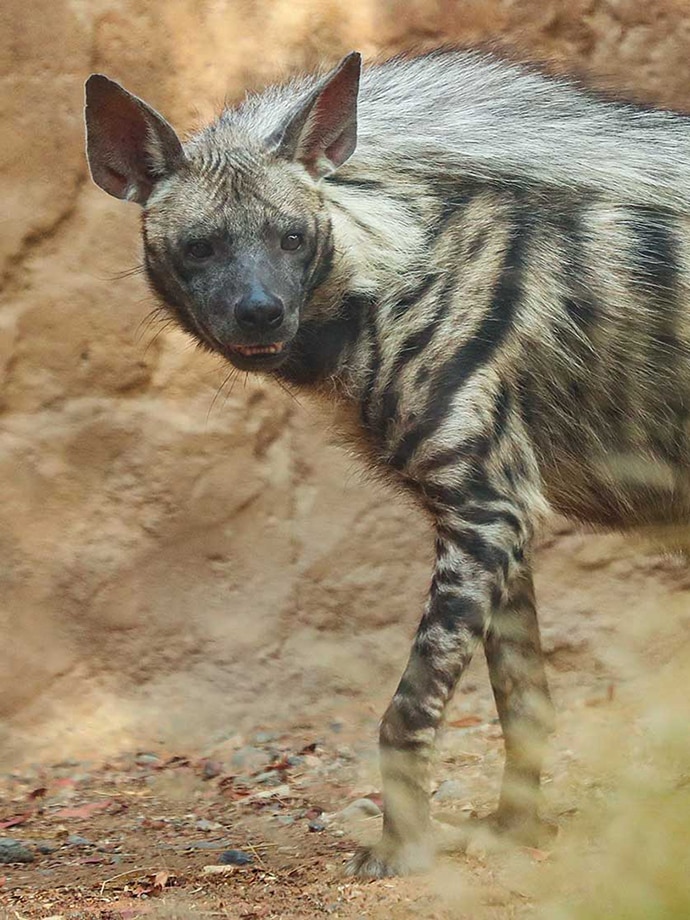
Striped Hyena

Zone
Africa/Arabia/India

Scientific name
Hyaena hyaena

IUCN Red List status
Near Threatened (NT) global
Vulnerable (VU) Mediterranean
Natural habitat
The striped hyena's habitat includes savannas, grasslands, semi-deserts, rocky hills, scrublands, and open woodlands.
Dietary Requirements
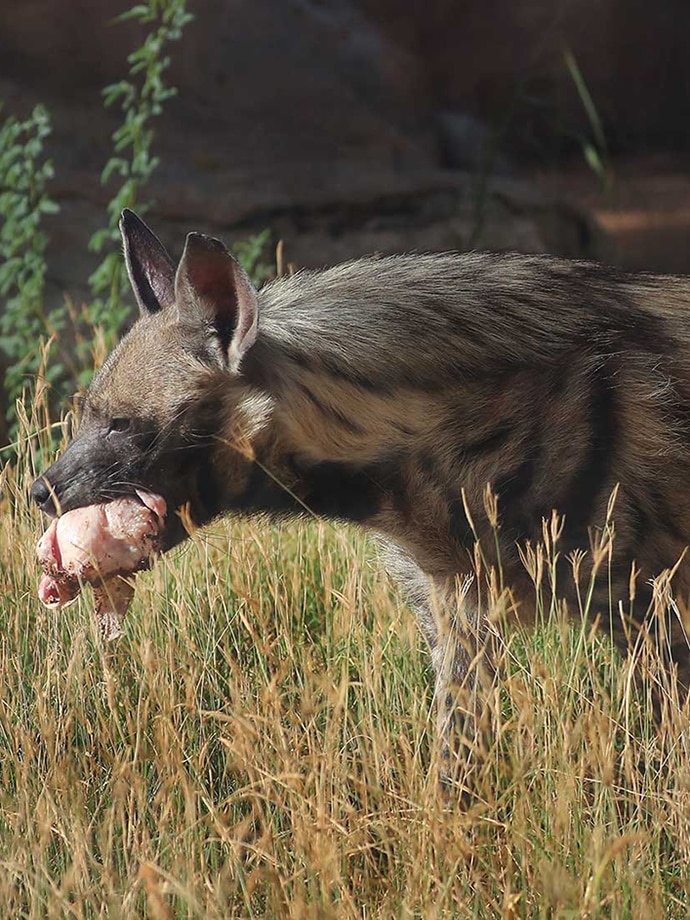
The striped hyena is a scavenger, eating mostly animal carcasses and human refuse. They eat off the leftover meat from bones that have been picked off by other predators.

Threats
Once widespread across North and East Africa, the Middle East, and India, the striped hyena population now faces steep declines. Habitat loss, road collisions, and shrinking food sources have reduced their range. In some regions, they’re also hunted or poisoned as pests or for body parts used in traditional medicine.
Conservation
Striped hyenas are now regionally extinct in the wild in Abu Dhabi according to recent surveys, though a reintroduction programme on Sir Bani Yas Island has seen them breed successfully in the Arabian Wildlife Park.
 Did you know?
The striped hyena once lived in the UAE but is now considered locally extinct. Hyenas still inhabit Oman, Saudi Arabia, and Yemen.
Did you know?A hyena's heart is twice as big as that of a similar-sized animal.
About Al Ain Zoo

About Al Ain Zoo
A Pioneering Vision
Established in 1968 by the UAE’s founding father Sheikh Zayed bin Sultan Al Nahyan, Al Ain Zoo has been in the forefront of preserving the region’s wildlife and delicate ecosystem, while caring for hundreds of endangered animals.
Learn More