About the size of a domestic cat, the sand cat is the only wild feline that lives exclusively in deserts. Its sandy to light gray coat blends seamlessly with its surroundings, helping it stay hidden from both prey and predators. Unlike house cats, it has a broad head with low-set ears, a stocky build, and short limbs. Its fur-covered paws act like natural shoes, protecting it from scorching sand and leaving almost no tracks behind.
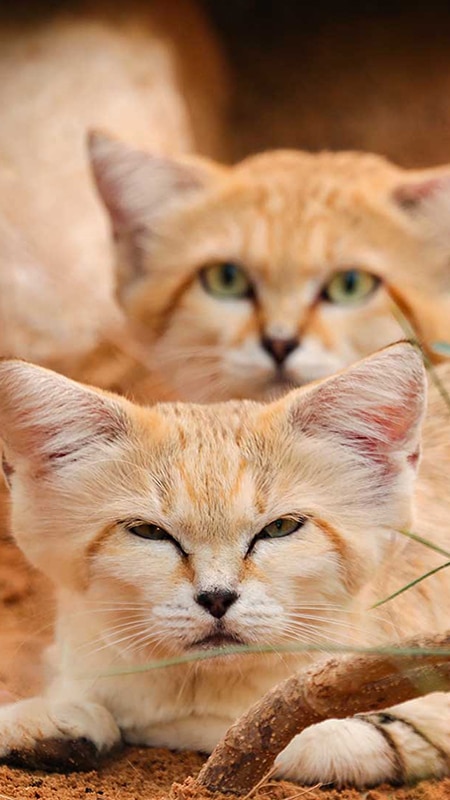
Sand Cat

Zone
Arabian

Scientific name
Felis margarita

IUCN Red List status
Least Concern (LC)

Natural habitat
Sand cats inhabit not only sandy environments but also gravel plains and, in the north of the Peninsula, the “harrat” volcanic lava plains.

Dietary Requirements
As carnivores, sand cats feed mainly on small rodents, birds, reptiles (including snakes) and other underground prey they dig from the sand.

Threats
Sand cats are declining in parts of the Arabian Peninsula primarily because of habitat loss and degradation, with expanding agriculture, infrastructure, and disturbance reducing prey and suitable den sites.
Conservation
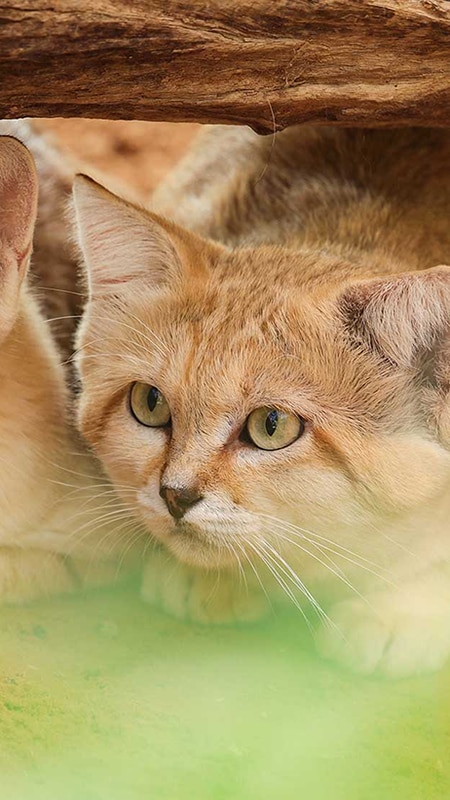
Focusing on the Arabian sand cat, Al Ain Zoo launched an ambitious research and conservation project in 2013. The zoo continues to collaborate with local, regional, and international partners to advance its efforts.
 Did you know?
Shy, elusive, and remarkably resilient, the Arabian sand cat is one of the least-known species in the region. Al Ain Zoo leads conservation efforts to protect and better understand Arabia’s smallest wild cat.
Did you know?The sand cat lifespan is much longer in captivity (often reaching around 13 to 15 years) than in the wild, where mortality from predation, disease and human impacts typically results in a shorter life expectancy.
About Al Ain Zoo

About Al Ain Zoo
A Pioneering Vision
Established in 1968 by the UAE’s founding father Sheikh Zayed bin Sultan Al Nahyan, Al Ain Zoo has been in the forefront of preserving the region’s wildlife and delicate ecosystem, while caring for hundreds of endangered animals.
Learn More