One of the heaviest land animals, the hippopotamus has a size and weight comparable to that of the rhinoceros. Its name comes from the Greek for “river horse,” a nod to the hippopotamus’ habitat and its water-loving nature, as well as its ability to stay submerged for up to 5 minutes, even while asleep.
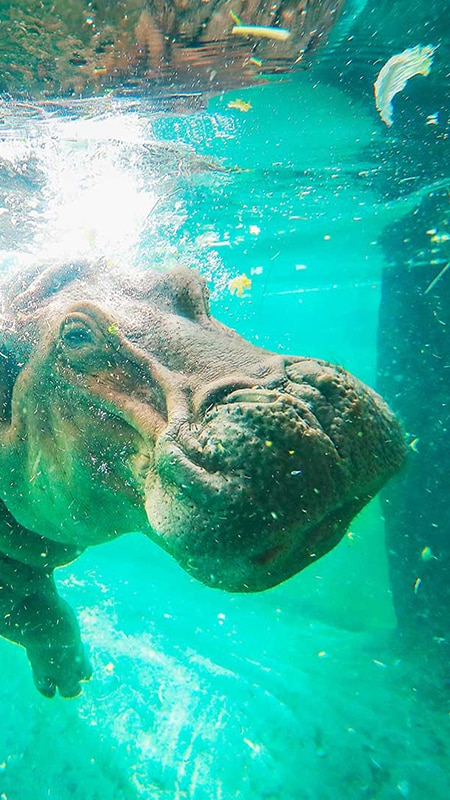
Hippopotamus

Zone
Africa

Scientific name
Hippopotamus amphibius

IUCN Red List status
Vulnerable (VU)

Natural habitat
The hippopotamus habitat includes rivers, lakes, and ponds, as well as marshy areas, swamps, and floodplains. They also spend some time in savannas and grasslands, grazing on grasses near bodies of water, especially at night.

Dietary Requirements
As a herbivore, the hippopotamus' diet is comprised mostly of grasses and some aquatic plants.

Threats
The major threats to hippopotamus populations include habitat loss caused by human settlement, agriculture, and waterway degradation. Poaching for meat and their ivory teeth, along with climate change, drought, and pollution, also contribute to their decline.
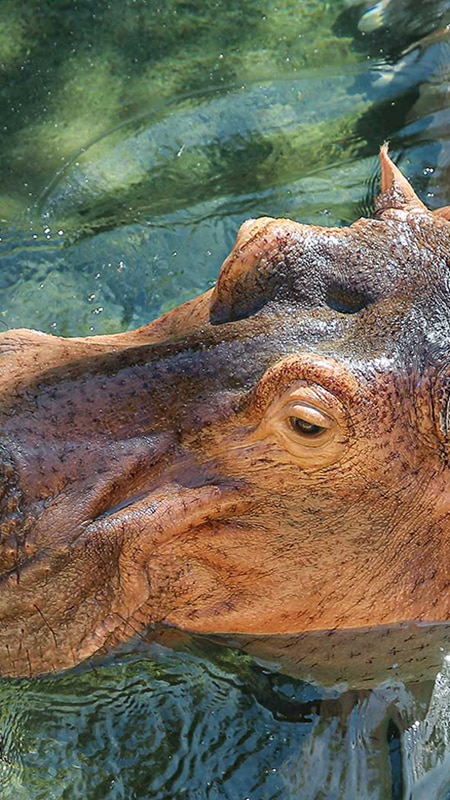
Conservation
Classified as Vulnerable, the common hippopotamus has declined by about 7 to 20% since the mid-1990s, with only 115,000 to 130,000 left in the wild. Conservation efforts focus on protecting freshwater habitats, curbing poaching for ivory and meat, and supporting community initiatives such as Ghana’s Wechiau Hippo Sanctuary. Regional projects, like the IUCN West Africa Action Plan, help stabilize populations through research and stronger protection.
 Did you know?
In the animal kingdom, the hippopotamus is most closely related to whales, dolphins and porpoises.
Did you know?Despite their massive size, a hippopotamus's speed can go up to 30 kilometers per hour but only for short distances.
About Al Ain Zoo

About Al Ain Zoo
A Pioneering Vision
Established in 1968 by the UAE’s founding father Sheikh Zayed bin Sultan Al Nahyan, Al Ain Zoo has been in the forefront of preserving the region’s wildlife and delicate ecosystem, while caring for hundreds of endangered animals.
Learn More