The emu is Australia’s largest bird and the second-tallest in the world after the ostrich. Flightless but fast, it can sprint up to 50 km/h using its powerful legs. Its shaggy feathers protect it from the sun’s heat, and it roams open plains and woodlands in search of seeds, fruits, and insects.
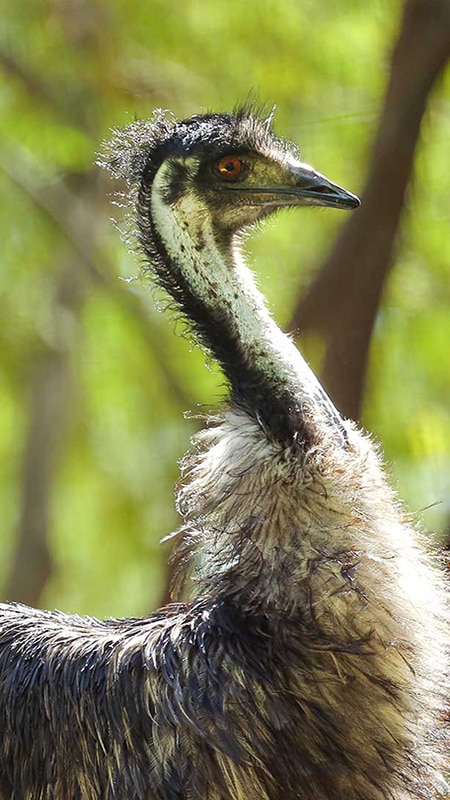
Emu

Zone
Australia

Scientific name
Dromaius novaehollandiae

IUCN Red List status
Least Concern (LC)

Natural habitat
Native to Australia, the emu population thrive in open plains, sclerophyll forest and open woodland, semi-arid scrublands.

Dietary Requirements
Emus are omnivores that prefer native plant species such as acacia, casuarina, cassia and desert quandong. They also consume animal droppings and insects like bogon moths, ants, spiders, beetles, millipedes, ladybirds.

Threats
The destruction of the emu's natural habitat, agriculture, vehicle strikes, and climate change-induced drought all pose a threat to the bird's population.
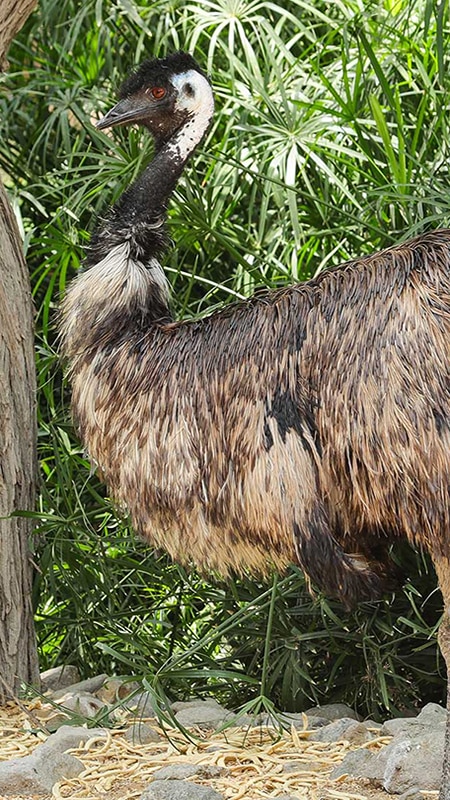
Conservation
Emus are protected species under Australian Federal law.
 Did you know?
Emus are important contributors to floral biodiversity via the dispersal of large viable seeds.
About Al Ain Zoo

About Al Ain Zoo
A Pioneering Vision
Established in 1968 by the UAE’s founding father Sheikh Zayed bin Sultan Al Nahyan, Al Ain Zoo has been in the forefront of preserving the region’s wildlife and delicate ecosystem, while caring for hundreds of endangered animals.
Learn More