Standing up to 1 meter at the shoulder, dama gazelles are the largest of all gazelles and can be recognized by their reddish-brown upper body, white undersides, and elegant, curved horns. Also known as the addra or mhorr gazelle, it is remarkably adapted to desert life, and can survive for extended periods without direct access to water. Catching a glimpse of a dama gazelle in the Sahara Desert was once easy, but today its habitat has shrunk so drastically that the species is now considered critically endangered.
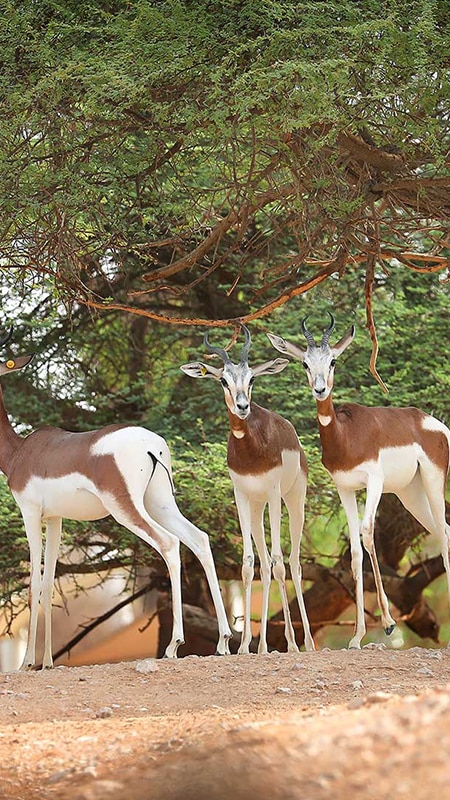
Dama Gazelle

Zone
Arabian

Scientific name
Nanger dama

IUCN Red List status
Critically Endangered (CR)

Natural habitat
Grasslands, sparsely wooded savannas, and sub-desert steppes make up the dama gazelle's habitat.

Dietary Requirements
As a herbivore, the dama gazelle's diet consists of fruits, leaves, grasses, and desert shrub shoots.

Threats
Primary threats to this species include habitat loss, poaching for hides, meat or horns, competition with domestic animal grazing, and severe droughts affected by climate change.
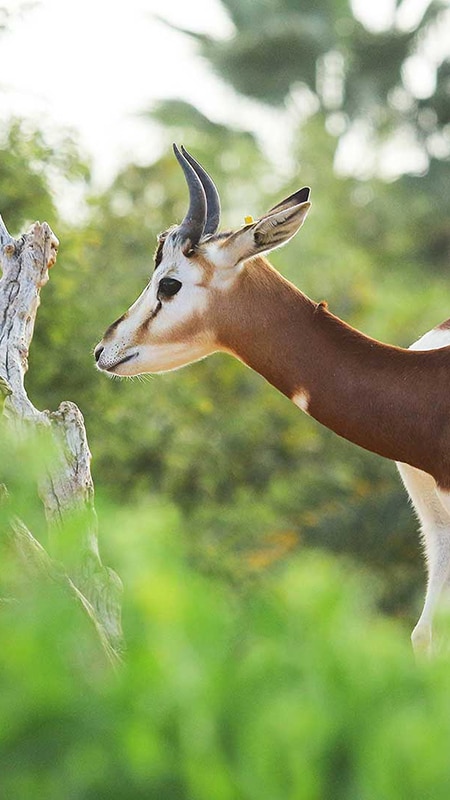
Conservation
The dama gazelle breeding herds at Al Ain Zoo are
among the most important in the world.
Al Ain Zoo is working with governments
and conservation agencies to protect the
remaining wild population.
 Did you know?
Dama gazelles are among the five most threatened antelope species in the world with less than 200 remaining in the wild.
Did you know?They can live up to 12 years in the wild and 19 years in captivity.
About Al Ain Zoo

About Al Ain Zoo
A Pioneering Vision
Established in 1968 by the UAE’s founding father Sheikh Zayed bin Sultan Al Nahyan, Al Ain Zoo has been in the forefront of preserving the region’s wildlife and delicate ecosystem, while caring for hundreds of endangered animals.
Learn More