The Barbary sheep is a sturdy, sand-brown mountain ungulate recognized by its backward-curving horns and the long shaggy mane that drapes from its throat and chest. Both agile and sure-footed, it is well adapted to steep, rocky terrain. Both sexes share the species’ characteristic muscular build and confident stance. As for the Barbary sheep's size, males of the species are typically larger. They also have more pronounced horns and heavier manes.
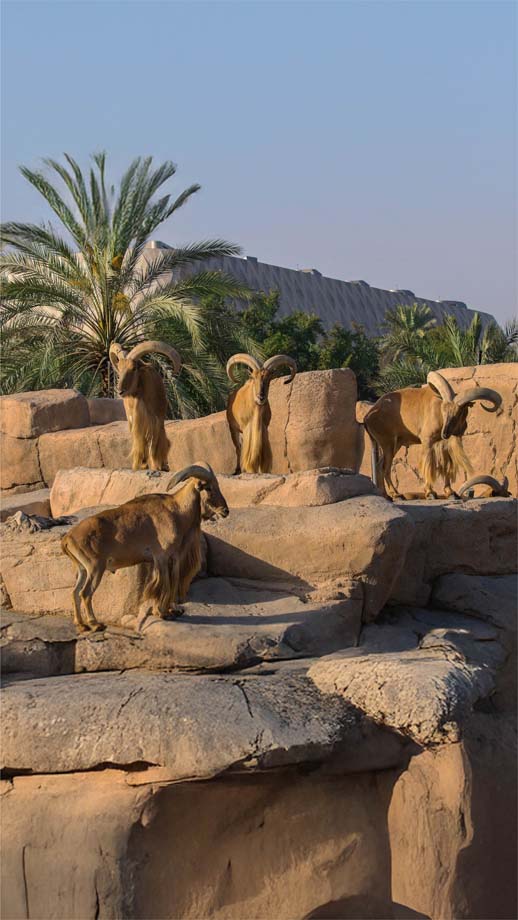
Barbary Sheep

Zone
Arabian

Scientific name
Ammotragus lervia

IUCN Red List status
Vulnerable (VU)

Natural habitat
Rocky, arid mountains in North Africa, primarily surrounding the barren centre of the Sahara Desert.

Dietary Requirements
Herbivore: Barbary sheep are grazers and will eat a wide variety of grass, flowers, young plants, leaves and shrubs.

Threats
Hunting, habitat destruction, overgrazing by domestic animals, climate change such as drought, feral dogs, as well as predators like the Barbary leopard, Barbary lion, and caracal.
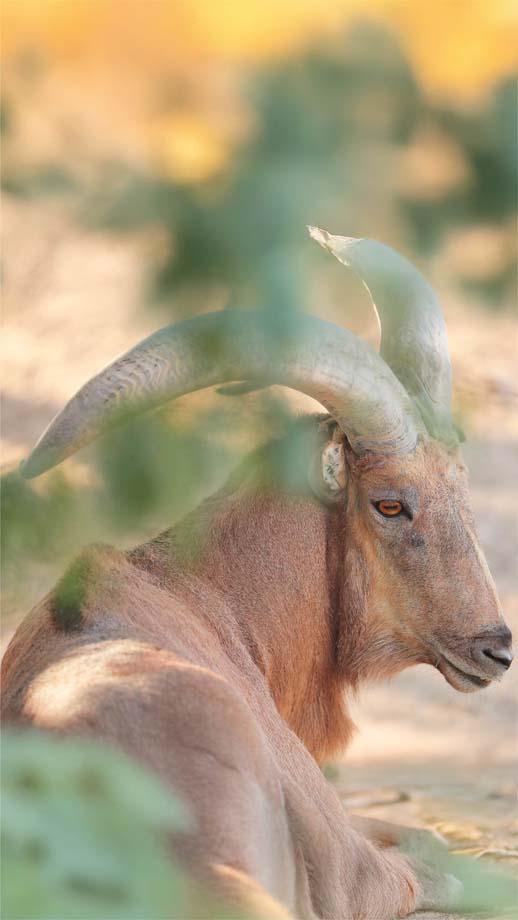
 Did you know?
Barbary sheep are very agile and can achieve a standing jump of over 2 metres.
A group of barbary sheep is called a “flock” or “herd”.
A group of barbary sheep is called a “flock” or “herd”.
About Al Ain Zoo

About Al Ain Zoo
A Pioneering Vision
Established in 1968 by the UAE’s founding father Sheikh Zayed bin Sultan Al Nahyan, Al Ain Zoo has been in the forefront of preserving the region’s wildlife and delicate ecosystem, while caring for hundreds of endangered animals.
Learn More