Amur tigers are the largest of all cats, with body lengths ranging from 2.4 to 3.7 meters and weighing up to 320 kilograms. More popularly referred to as Siberian tigers, these felines are known for their iconic pale orange coat with black stripes and role as apex predators. Solitary by nature (except for mothers raising cubs), it hunts primarily at night and in low light, aided by excellent vision. Because the Amur tiger’s habitat is the Russian Far East, they are uniquely adapted and even thrive in freezing conditions and snowy forests.
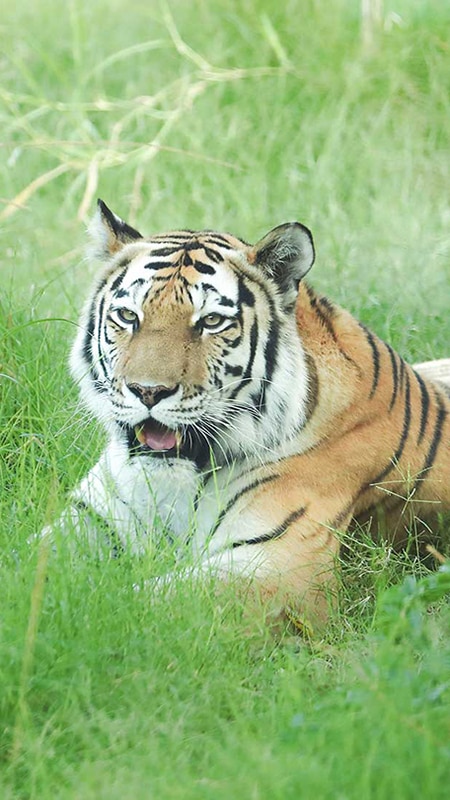
Amur Tiger

Zone
Asia

Scientific name
Panthera tigris altaica

IUCN Red List status
Endangered (EN)

Natural habitat
Amur tigers thrive in cold-climate regions, particularly the mountainous snow forests adjoining Russia, China and North Korea.

Dietary Requirements
As obligate carnivores, amur tigers prey on animals present in their natural habitat, including deer (red, sika, roe, and musk), wild boar, brown bear cubs, birds, and racoon dogs. They also consume the ocassional livestock near human settlements, such as goat, sheep, and cattle.

Threats
Many Amur tiger habitats are lost or fragmented due to human activities like logging and road construcion. They are also hunted and poached for their skin, bones, and other body parts. Humans also compete with them for prey by illegally hunting deer and wild boar.
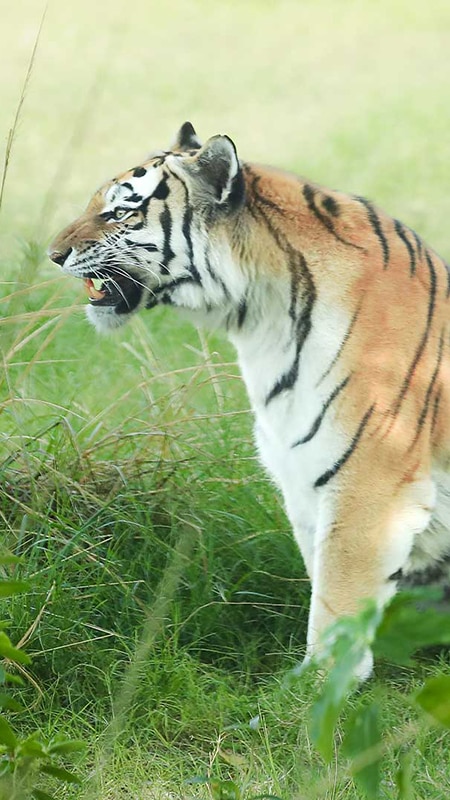
Conservation
Fewer than 600 amur tigers remain in the wild. Once classified as Critically Endangered, the subspecies was downlisted to Endangered by the IUCN Red List in 2008 following conservation successes in Russia. However, poaching remains a major threat, accounting for an estimated 75 to 85% of all amur tiger deaths, with 20 to 30 individuals illegally killed each year.
 Did you know?
Their thick paw fur acts as ‘winter boots’ to protect them from freezing temperatures and snow.
Did you know?Amur tigers have the thickest fur of all tiger subspecies and a layer of fat beneath their skin to help them survive the freezing Siberian winters, where temperatures can drop below -40°C.
About Al Ain Zoo

About Al Ain Zoo
A Pioneering Vision
Established in 1968 by the UAE’s founding father Sheikh Zayed bin Sultan Al Nahyan, Al Ain Zoo has been in the forefront of preserving the region’s wildlife and delicate ecosystem, while caring for hundreds of endangered animals.
Learn More